How to Wash a Ceramic Coated Car at Home
A ceramic coating makes your vehicle easier to clean, but it does not make it maintenance-free.
That is one of the biggest misconceptions people have after having their car, truck, Corvette, classic, or weekend vehicle ceramic coated. The coating helps protect the surface, makes washing easier, and helps dirt release more easily, but the way you wash the vehicle still matters.
If you care about your vehicle, you probably do not want to run it through an automatic brush wash or scrub it with whatever towel happens to be sitting in the garage. You want to maintain it the right way, keep the gloss up, and avoid creating swirl marks or scratches.
This guide will walk you through how to wash a ceramic coated car at home using a safe rinseless wash method. It is the same kind of maintenance approach we teach many of our ceramic coating customers at Arch City Detail.
Can You Wash a Ceramic Coated Car at Home?
Yes, you can absolutely wash a ceramic coated car at home.
The key is using the right process. A ceramic coating is durable, but the paint underneath can still be scratched by improper washing. Most wash damage does not come from the soap itself. It comes from dragging dirt across the paint with too much pressure, dirty wash media, or poor drying towels.
The goal is simple: safely remove dirt while touching the paint as little and as gently as possible.
For maintenance cleaning, a rinseless wash is one of the most practical ways to do that. Even though it works especially well for garage-kept vehicles, weekend cars, and secondary vehicles that are not heavily soiled but still need regular cleaning, it can be effective on daily driven cars as well.
If you are looking for a safe way to wash a ceramic coated vehicle at home, this is one of the easiest methods to learn.
Why Rinseless Washing Works Well for Ceramic Coated Vehicles
A rinseless wash allows you to clean your vehicle without a hose, foam cannon, pressure washer, or full driveway wash setup.
Instead of rinsing the entire vehicle, foaming it, washing it, rinsing again, and drying, you wash one section at a time using a rinseless wash solution. The product adds lubrication and helps lift dirt from the surface so it can be safely wiped away.
For a ceramic coated vehicle, this method makes a lot of sense.
Ceramic coated paint is usually easier to clean because dirt and grime have a harder time bonding to the surface. That means you often do not need an aggressive wash process, especially if the vehicle is lightly dusty or has normal road film from daily driving.
This is especially helpful for owners who keep a vehicle in the garage, drive it on weekends, take it to cars and coffee, or just like keeping it clean without turning every wash into a full afternoon project.
A rinseless wash is not the right answer for every situation, though. If the vehicle is covered in mud, heavy road salt, thick grime, or caked-on contamination, it should be rinsed thoroughly first or washed using a more traditional method.
What You Need to Wash a Ceramic Coated Car at Home
You do not need a complicated setup to do this correctly.
For a basic rinseless maintenance wash, you will need:
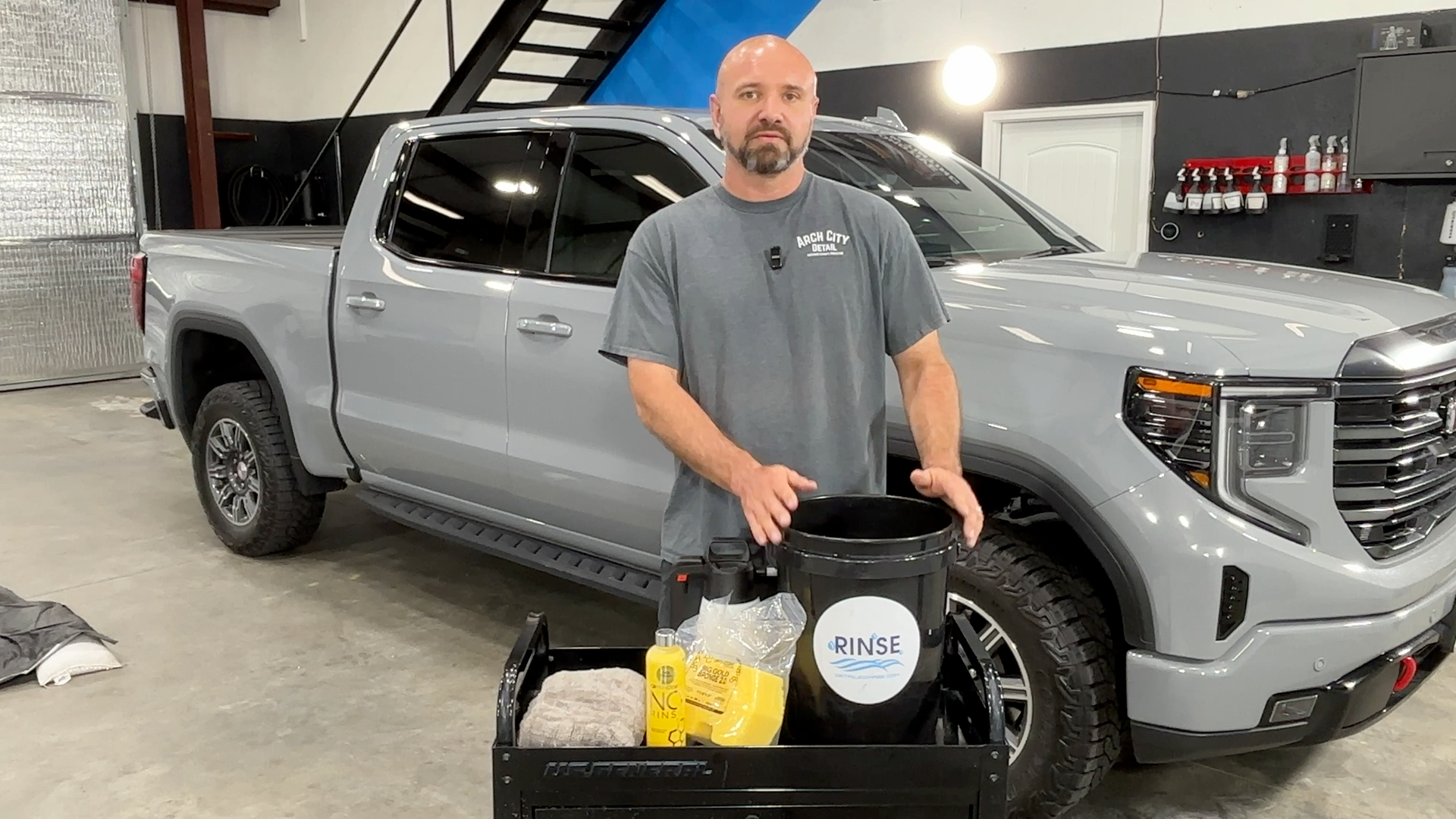
- Opti-Coat No Rinse or a quality rinseless wash
- Big Gold Sponge or safe rinseless wash media
- A clean bucket
- Water
- A quality drying towel
- Optional spray bottle with rinseless wash solution
At Arch City Detail, we commonly use Opti-Coat No Rinse with the Big Gold Sponge for this kind of maintenance wash. Opti-Coat No Rinse is designed for ceramic coated vehicles, and the Big Gold Sponge works well because it holds a large amount of solution and releases dirt when used properly.
You do not need to overcomplicate this. The products matter, but the process matters more.
Step 1: Mix the Rinseless Wash Solution
Start by filling a clean bucket with 2 gallons of water.
Add 1 ounce of Opti-Coat No Rinse to the bucket and mix the solution. Then place the Big Gold Sponge into the bucket and allow it to fully soak up the rinseless wash solution before touching the vehicle.
This step is important.
The sponge should be loaded with solution. That lubrication is what helps the sponge glide across the surface instead of dragging dirt across the paint. A dry or under-saturated sponge is not what you want on a ceramic coated vehicle.
Before you start washing, make sure your drying towel is clean and ready. Many scratches and towel marks happen during the drying process, so do not treat the towel as an afterthought.
Step 2: Pre-Spray Bugs, Lower Panels, and Dirty Areas
Before you start wiping the vehicle, walk around it and look for areas with heavier dirt.
The dirtiest areas are usually:
- Behind the wheels
- Lower doors
- Rocker panels
- Rear bumper
- Front bumper
- Mirrors
- Bug-heavy areas on the front end
These areas should be pre-sprayed with rinseless wash solution before you touch them with the sponge.
Pre-spraying gives the product time to start loosening dirt, bugs, and road film. This makes the wash process safer because you are not immediately dragging a sponge across dry contamination.
You are not just trying to make the car wet. You are trying to reduce the chance of scratching the finish. An automotive all purpose cleaner, like Opti-Coat Power Clean may also be necessary for stubborn contaminates.
Step 3: Wash From the Top Down
Always wash from the top down.
The upper sections of the vehicle are usually cleaner. The lower sections collect the most dirt, sand, brake dust, and road grime. If you start at the bottom and then move to the top, you increase the chance of carrying dirt to cleaner areas.
A good wash order looks like this:
- Roof
- Glass
- Hood and trunk
- Upper doors and fenders
- Lower doors and rocker panels
- Bumpers and dirtiest areas last
Use light pressure. Let the solution and sponge do the work.
You do not need to scrub aggressively. If something does not come off with a gentle pass, stop and pre-spray that area again (or spray with Power Clean). Scrubbing harder is usually not the best answer.
After each section, return the sponge to the bucket and allow it to release dirt into the solution. The Big Gold Sponge is designed to work with this style of washing, but it still needs to be used correctly.
The safest approach is to work methodically. Clean one section at a time, keep the sponge loaded with solution, and save the dirtiest areas for last.
Step 4: Dry Carefully
Drying is where a lot of people accidentally damage paint.
A ceramic coated car may shed water more easily, but you still need to dry it with care. Use a clean, soft drying towel and light pressure. Do not grind the towel into the paint. Do not use an old bath towel. Do not use a towel that has been dropped on the floor.
If you are washing outside in direct sun or warm weather, wash and dry one section at a time. You do not want the rinseless wash solution drying on the surface.
If the vehicle is inside or in the shade, you may be able to wash multiple sections before drying. The important thing is to pay attention. Do not let product sit long enough to dry on the paint.
If the solution happens to dry, re-wash the dried area to remove the dried wash liquid and any remaining dirt before immediately drying.
For garage-kept vehicles, this is one of the reasons rinseless washing is so convenient. You can often clean the vehicle inside the garage without dragging out a hose or making a mess in the driveway.
When a Rinseless Wash Is Not Enough
A rinseless wash is excellent for light to moderate dirt, dust, pollen, and normal maintenance cleaning.
It is not the right method for every vehicle in every condition.
If your vehicle is covered in mud, heavy salt, thick road grime, or gritty contamination, rinse it first. If you cannot safely remove the heavy dirt before touching the paint, a rinseless wash may not be the safest first step.
This is especially important for vehicles driven through winter conditions or left outside for long periods.
When in doubt, be conservative. It is better to rinse first or schedule a professional exterior detail than to risk scratching a vehicle you care about.
If your vehicle needs more than a light maintenance wash, Arch City Detail offers professional exterior detailing for drivers in High Ridge, St. Louis, Fenton, and surrounding areas.
Common Mistakes to Avoid When Washing a Ceramic Coated Car
The first mistake is assuming a ceramic coating cannot be scratched.
A coating adds protection, but it does not make the vehicle immune to poor washing habits. Dirty towels, aggressive scrubbing, and automatic brush washes can still create swirl marks and fine scratches.
The second mistake is washing a vehicle that is too dirty without rinsing it first. A rinseless wash is a maintenance method. It is not meant to replace common sense. If the vehicle has heavy contamination, rinse it first or use a more traditional wash process.
The third mistake is using household soap. Dish soap and household cleaners are not designed for maintaining automotive paint or ceramic coatings. Use products made for vehicle surfaces.
The fourth mistake is using too much pressure. More pressure does not mean a better wash. In many cases, it just means a greater chance of dragging dirt across the paint.
The fifth mistake is forgetting about drying. A clean wash followed by a dirty towel can still create problems. Your drying towel should be clean, soft, and used gently.
Finally, avoid automatic brush car washes if you care about preserving the finish. They may be convenient, but they are not ideal for a ceramic coated vehicle, especially one you want to keep looking its best for years.
How Often Should You Wash a Ceramic Coated Car?
There is no single perfect schedule for every vehicle.
A garage-kept weekend car may only need a maintenance wash every few weeks or after it has been driven. A daily driver may need to be washed more often, especially after rain, road construction, bugs, pollen, or winter road grime.
The best answer is to wash the vehicle before dirt has a chance to build up heavily.
If bird droppings, bugs, or sap land on the vehicle, clean them sooner rather than later. Even with a ceramic coating, those contaminants should not be left sitting on the surface.
For most enthusiasts, the goal is not just cleanliness. The goal is preserving the finish.
Why Proper Washing Helps Your Ceramic Coating Last Longer
A ceramic coating is an investment.
Proper maintenance helps you get the most out of that investment. Safe washing helps preserve gloss, maintain slickness, support water behavior, and keep the vehicle looking the way it should.
This is why we spend time educating customers after a ceramic coating is installed. At Arch City Detail, our ceramic coating process is not just about applying a product and sending the customer out the door. We want you to understand how to care for the vehicle after the work is done.
For many coating customers, we demonstrate proper maintenance washing during the 30-day post-coating inspection and wash. That gives the customer a chance to ask questions, see the process, and learn how to maintain the vehicle correctly at home.
If you enjoy taking care of your own vehicle, that education matters. The better your maintenance process is, the better your vehicle will look over time.
If your paint already has swirl marks, scratches, or wash damage, a coating alone will not remove those defects. In that case, a professional paint correction service may be needed before ceramic coating or before trying to restore the finish.
Should You Still Have Your Ceramic Coated Vehicle Professionally Maintained?
Even if you like washing your own car, there are times when professional help makes sense.
A rinseless wash is great for regular upkeep, but it does not replace deeper exterior cleaning, paint decontamination, water spot removal, or correction work when the finish needs more attention.
Think of at-home washing as maintenance. Professional detailing is the reset.
If your vehicle starts to feel rough, loses gloss, develops water spots, or no longer cleans up as easily as it used to, it may be time to have it professionally inspected.
That does not mean you did anything wrong. It simply means the vehicle may need more than a basic maintenance wash.
Final Thoughts
Learning how to wash a ceramic coated car at home is one of the best things you can do to protect your vehicle’s finish.
The process does not have to be complicated. Use the right rinseless wash solution, keep your sponge loaded with product, pre-spray dirty areas, wash from the top down, and dry carefully with clean towels.
A ceramic coating makes maintenance easier, but your technique still matters.
If you have a garage-kept vehicle, weekend car, classic, Corvette, truck, or secondary vehicle that you take pride in maintaining, a rinseless wash can be a simple, convenient, and effective way to keep it looking its best.
Arch City Detail offers ceramic coating services in High Ridge, MO, along with exterior detailing, paint correction, and maintenance guidance for drivers throughout the St. Louis area.
Whether you want professional help protecting your vehicle or you simply want to learn how to maintain it properly, we are here to help.
Your experience is our priority.
Frequently Asked Questions
Can I wash a ceramic coated car at home?
Yes. You can wash a ceramic coated car at home as long as you use safe products, clean wash media, proper lubrication, and gentle technique.
Is rinseless wash safe for ceramic coating?
Yes, a quality rinseless wash can be safe for ceramic coated vehicles when used correctly on light to moderate dirt. The vehicle should not be heavily covered in mud, salt, or gritty contamination.
Can I take a ceramic coated car through an automatic car wash?
It is best to avoid automatic brush car washes. They can create swirl marks and fine scratches, even on coated vehicles.
How often should I wash my ceramic coated vehicle?
It depends on how often the vehicle is driven and how dirty it gets. A garage-kept weekend vehicle may only need occasional maintenance washes, while a daily driver usually needs more frequent cleaning.
What should I avoid when washing a ceramic coated car?
Avoid dirty towels, aggressive scrubbing, household soaps, automatic brush washes, and using a rinseless wash when the vehicle is too dirty to safely wipe.